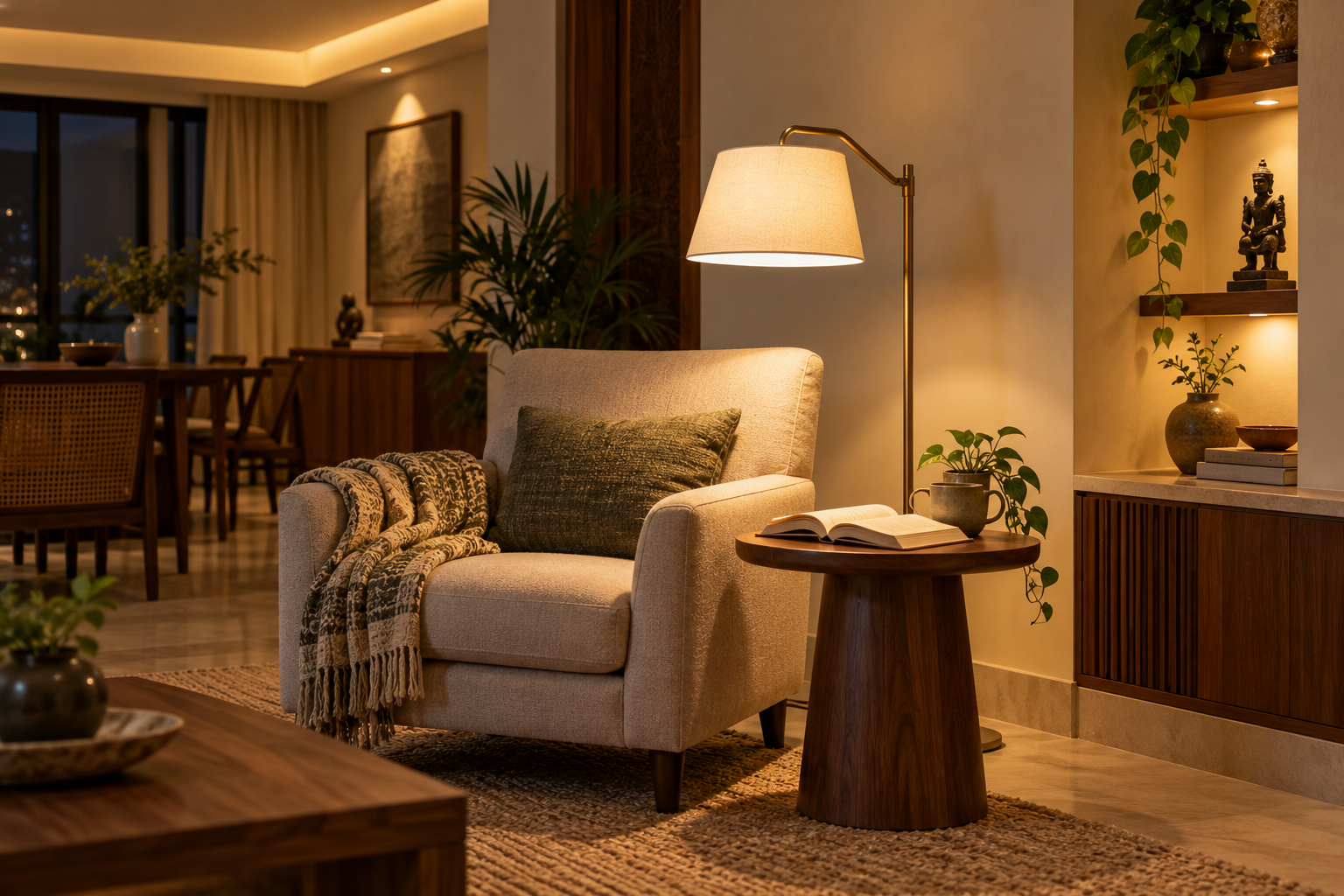
A dedicated reading light with gentle background illumination
A living room does a lot of jobs. It is where you catch up with family, read a few pages, watch television and have friends over. The lighting needs to work for all of those moments, without making the room feel harsh or leaving you searching for a brighter seat.
Start with the furniture and the way you use the space. Then decide where you need light, what deserves attention and which areas can stay softer. A neat grid of ceiling lights rarely answers all three questions.
1. Which Lights Should You Choose?
If you watched our living room lighting Reel, you will recognise these rankings. They reflect how useful each fixture can be in a typical living room, rather than an absolute judgement of product quality. Placement, optics and control still matter, even for an S-Tier fixture.
| Fixture | Tier | Where it works well |
|---|---|---|
| COB Spotlights | S | Highlighting artwork, furniture and decorative objects, and creating a clear visual focus. |
| Wall Washers | S | Illuminating vertical surfaces evenly. A well-lit wall adds depth and can make the room feel brighter. |
| Cove Lights | A | Providing soft indirect illumination for relaxed evenings and a gentle background glow. |
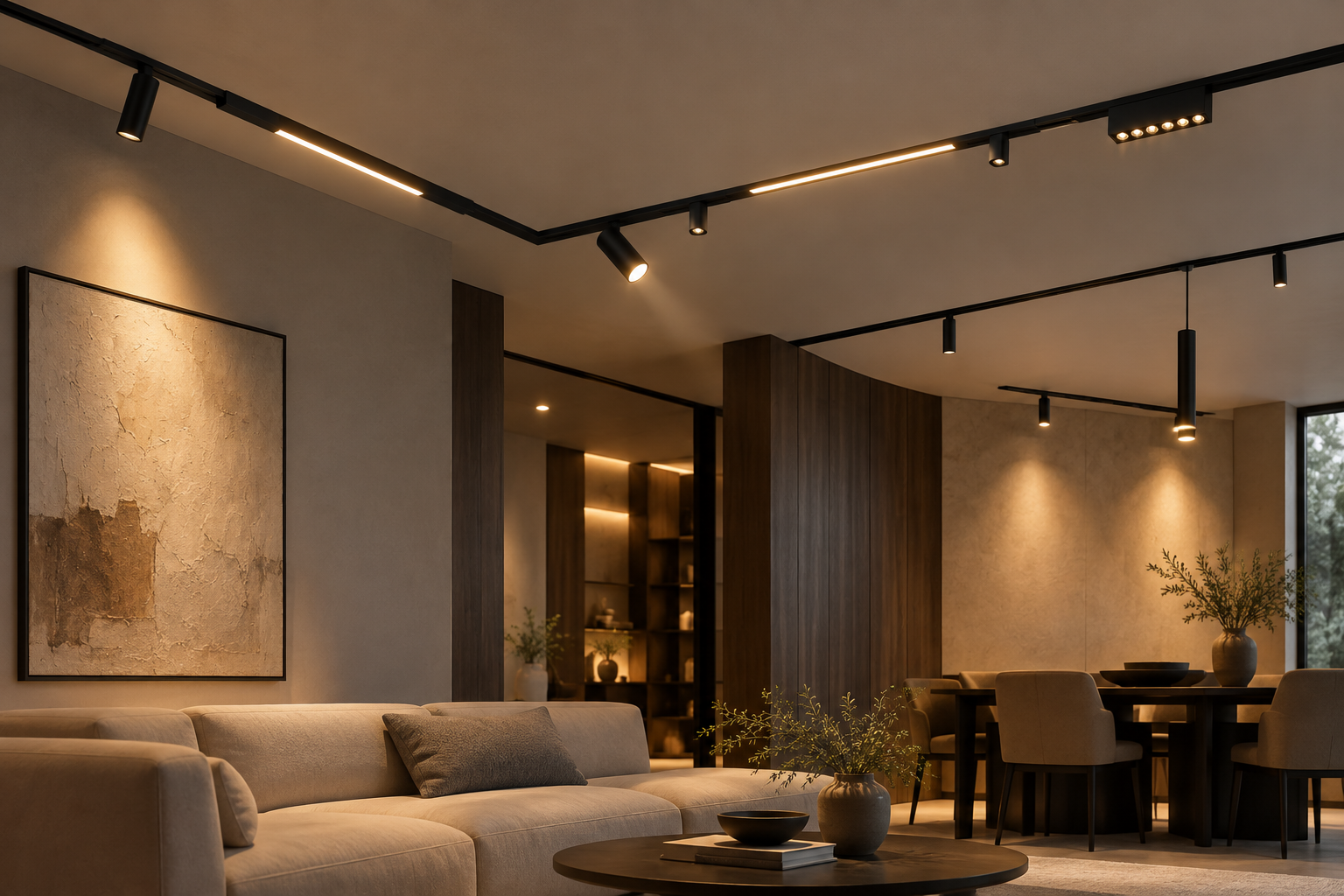
| Track Lights | A | Offering adjustable directional light, especially when artwork or furniture arrangements change. |
| Linear Lights | B | Integrating light into shelves or architectural details and illuminating specific areas. Give each run a clear purpose. |
| Panel Lights | D, when used alone | Providing general illumination. Relying on them as the entire lighting solution can leave a living room feeling flat. |
Panel lights are not inherently bad fixtures. The D-Tier ranking applies when they are used alone to do every job in the living room. They can be useful as part of a considered scheme, but general illumination cannot replace task light or the accents that give a room depth.
2. The Three Layers of Lighting
You do not need every type of fixture in the catalogue. You need a few types of light that work together.
General Lighting
This is the comfortable background light that helps you move around and use the room. Suitable downlighting, wall washing or indirect cove lighting can provide it. Aim for enough light to feel at ease, without making every surface equally bright.
Task Lighting
A reading chair needs light on the page. A spot used for occasional work needs light on the work surface. A floor lamp or table lamp beside the seat often handles this better than turning up all the ceiling lights. Position it so your body does not cast a shadow over what you are doing.
Accent Lighting
This draws attention to artwork, a textured wall, display shelves or an architectural feature. Choose one or two things worth highlighting, rather than making everything compete for attention.
The layers can overlap, but each should have a job. Combining them gives you more flexibility than using one fixture everywhere.
3. Plan Around Your Furniture
Mark the sofa, chairs, coffee table, television, artwork and shelves on your plan before deciding where the fixtures go. Look at the room from seated positions as well as from the doorway.
- Sofa and seating areas: Avoid exposed bright sources directly in your line of sight. Check overhead lights while seated and leaning back. Recessed sources, suitable optics and careful aiming can help reduce discomfort.
- Coffee table: A focused beam can bring attention to the table and the objects on it. Keep the light on the surface rather than in the eyes of people sitting around it.
- Artwork: Adjustable spotlights work well for individual pieces. Wall washers can suit a broader display or an evenly lit wall. Check for reflections on glass-fronted artwork before fixing the position.
- Reading corner: Give the chair its own task light, ideally with a convenient switch or dimmer. Keep some gentle background illumination so the page does not sit in an otherwise dark room.
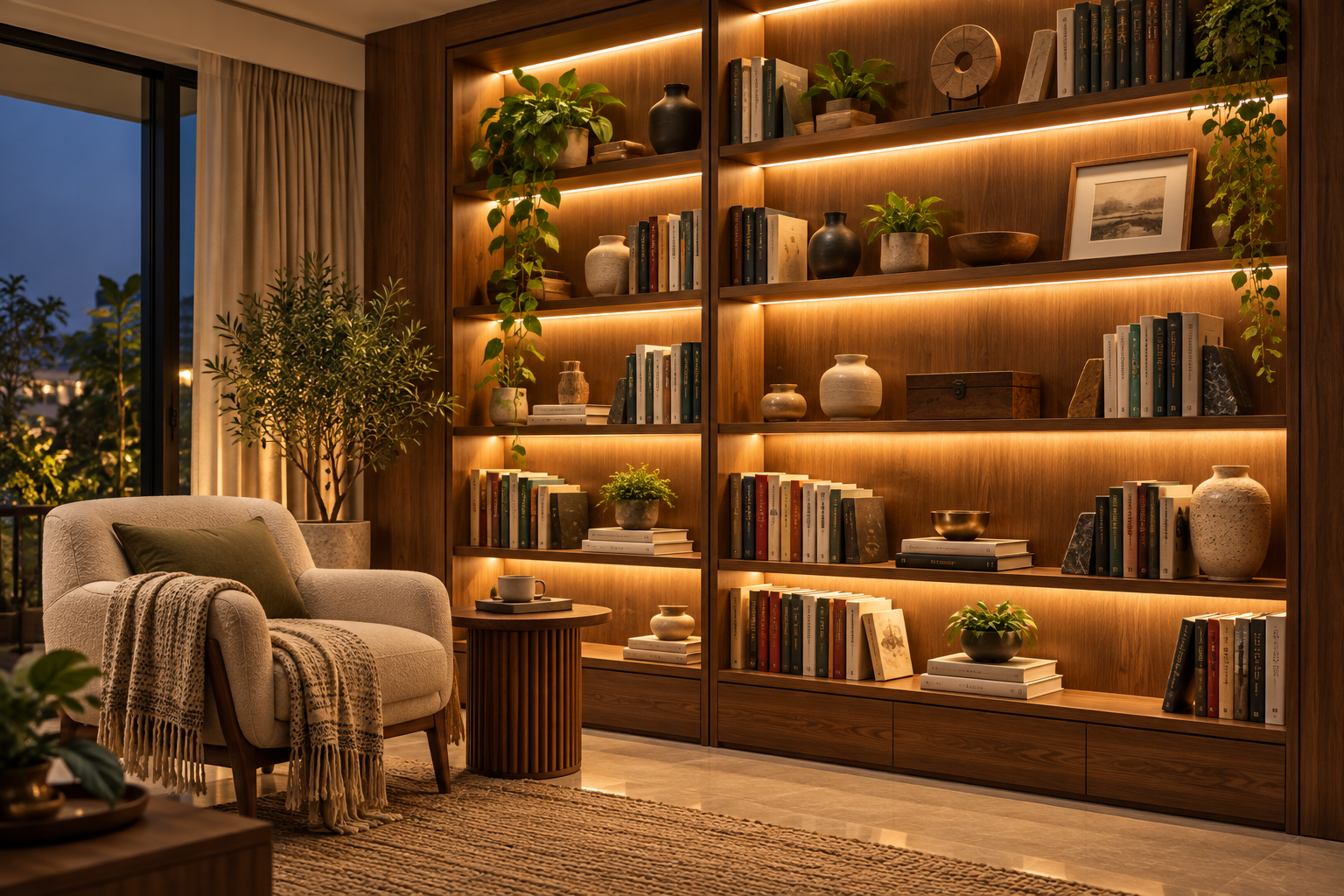
- Display shelves: Concealed linear lighting can make objects easier to see. Lighting near the front, directed down, reveals the objects; lighting at the back creates more silhouette and atmosphere. Hide the source from normal viewing angles.
- Feature walls: Wall washing spreads light evenly across a surface. Wall grazing places light close to the wall to bring out texture through light and shadow. Grazing suits stone, brick or timber, but can also emphasise uneven finishes.
Every fixture should have a reason to be there. If you cannot say what it is lighting or why that area needs light, reconsider it.
4. Lighting Around the Television
A bright fixture reflected in the screen is distracting. So is watching a bright screen in a completely dark room. The aim is to keep a little comfortable background light without throwing light onto the screen.
Use gentle indirect lighting, such as a dimmed cove or a concealed source behind the television, where it suits the setup. Keep spotlights aimed away from the screen and check lamps and ceiling lights for reflections from each actual seating position. A light that looks fine from the centre of the sofa may reflect from a chair at the side.
Give the lights near the television a separate control so you can lower them without switching off the whole room.
5. Colour Temperature, Colour Rendering and Glare
Choose a Warm Starting Point
For most living rooms, 2700K–3000K is a useful range to explore. 2700K feels warmer and often suits a relaxed evening atmosphere. 3000K looks a little crisper while still feeling warm.
These are starting points, not universal rules. Daylight, wall colours, materials and personal preference all affect the result. Compare samples in your room if possible, and keep lights used together consistent unless a deliberate contrast is part of the design.
Look Beyond Colour Temperature
Colour temperature tells you how warm or cool the light appears. Colour rendering describes how faithfully it shows the colours of the things it falls on. CRI 90+ is a useful specification where artwork, fabrics, furniture and skin tones need to look accurate. It is still worth viewing the actual materials under the proposed light.
Check Glare From Where You Sit
Glare depends on the fixture, its optics, placement and aiming. A bright source visible from the sofa can be uncomfortable even when the room is not especially bright. Look for suitable shielding or recessed sources, choose beams for the surfaces being lit, and aim adjustable fixtures carefully. Dimming helps set the level, but does not fix poor placement.
6. Lighting Scenes for Different Activities
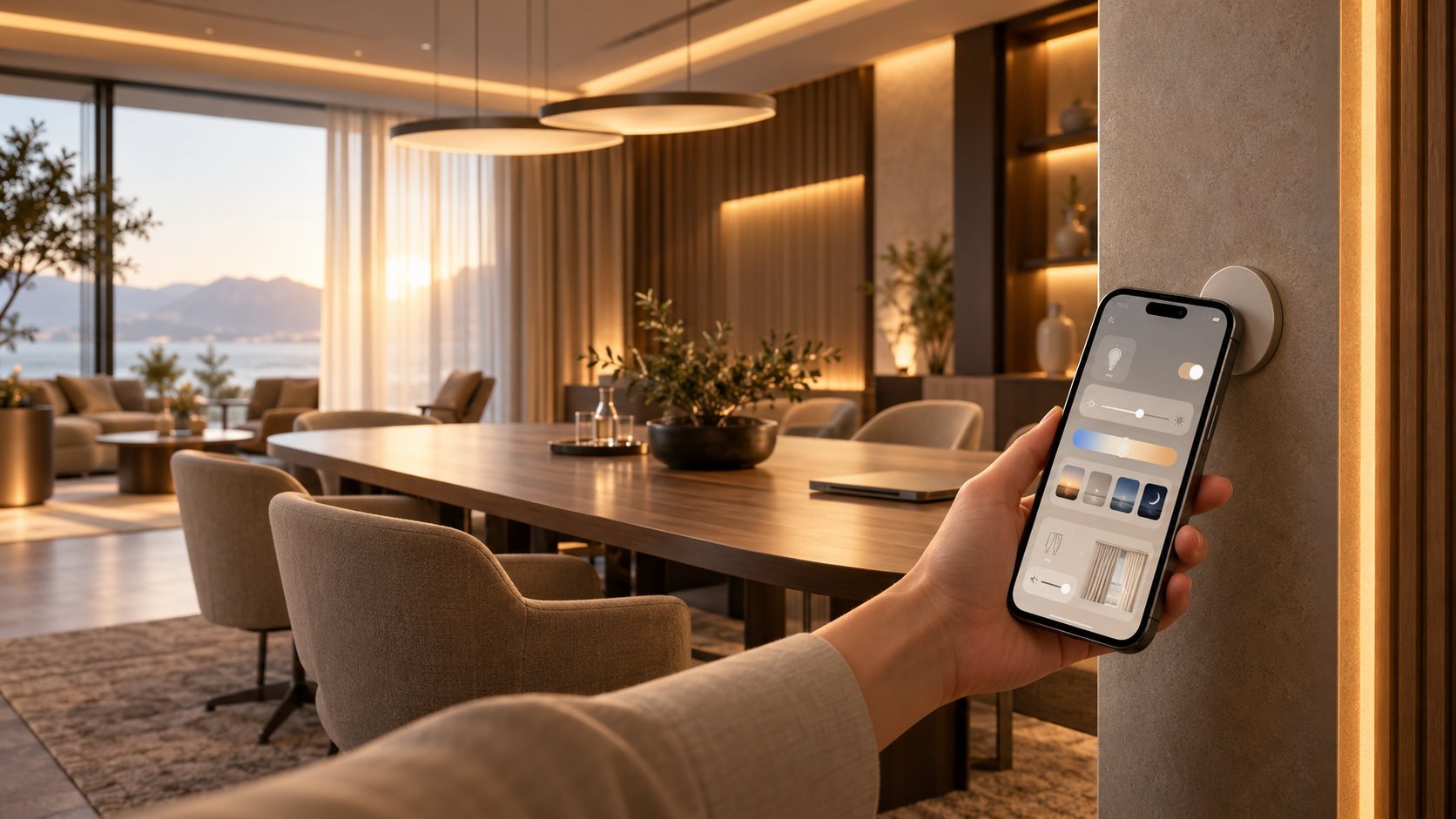
A good lighting plan lets the same room feel different as the evening changes. You can create useful scenes with separate switches and dimmers; a compatible control system can make recalling them more convenient.
| Activity | Suggested Lighting |
|---|---|
| Everyday Evening | Soft general lighting with selected accents. |
| Watching TV | Dimmed indirect lighting away from the screen. |
| Reading | Focused task lighting with gentle background illumination. |
| Entertaining | Dimmed general lighting, accent lighting and decorative fixtures. |
| Relaxing | Warm table lamps or soft indirect cove lighting. |
Control general, task and accent lighting separately wherever practical. That way, reading does not require every light to be on, and watching television does not mean sitting in darkness.
Plan dimming before purchasing. The fixture, driver and control must work together, and not every LED fixture is dimmable. Confirm the dimming method and usable range with the supplier, and test the combination for flicker, smooth adjustment and stable light at low levels.
7. Final Checklist
- Have you planned the lights around the furniture and the activities in each area?
- Does the room have general, task and accent lighting where needed?
- Have you checked glare and television reflections from the actual seats?
- Have you chosen a suitable colour temperature and colour rendering for the materials in the room?
- Can you control the layers separately, and have you confirmed fixture, driver and dimmer compatibility?
Good living room lighting isn't about how many fixtures you install. It's about what each one does for the space.
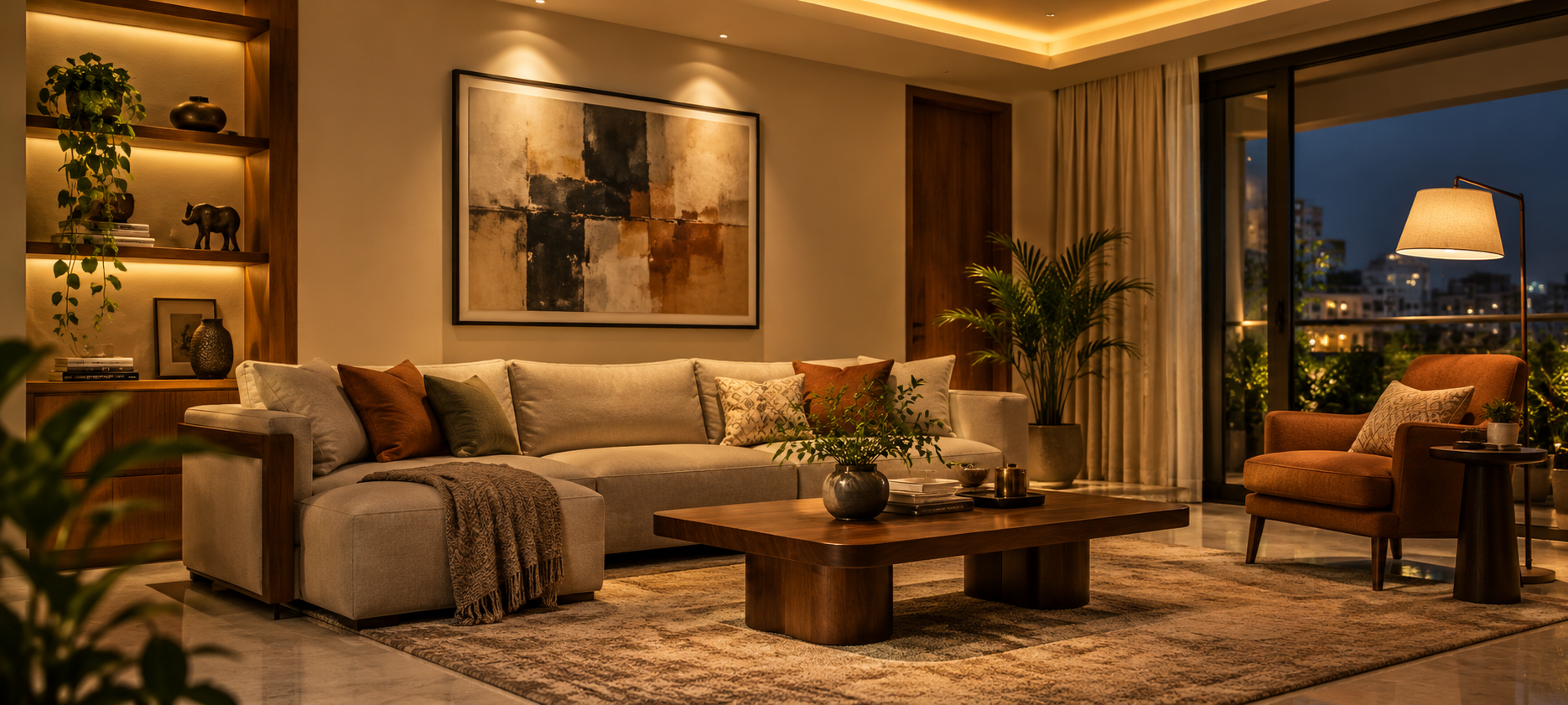
General, task and accent lighting working together in a living room.