You chose a stone with just the right amount of texture for your living room. In the showroom, you could see every ridge and little variation in the surface. At home, under the evening lights, the wall looks almost flat.
The difference may come down to where the light meets the wall. Light that spreads evenly across the stone softens the small shadows that give it depth. Bring the light closer and let it skim down the surface, and those shadows begin to show. That’s the difference between wall washing and wall grazing.
When you want the whole wall to glow
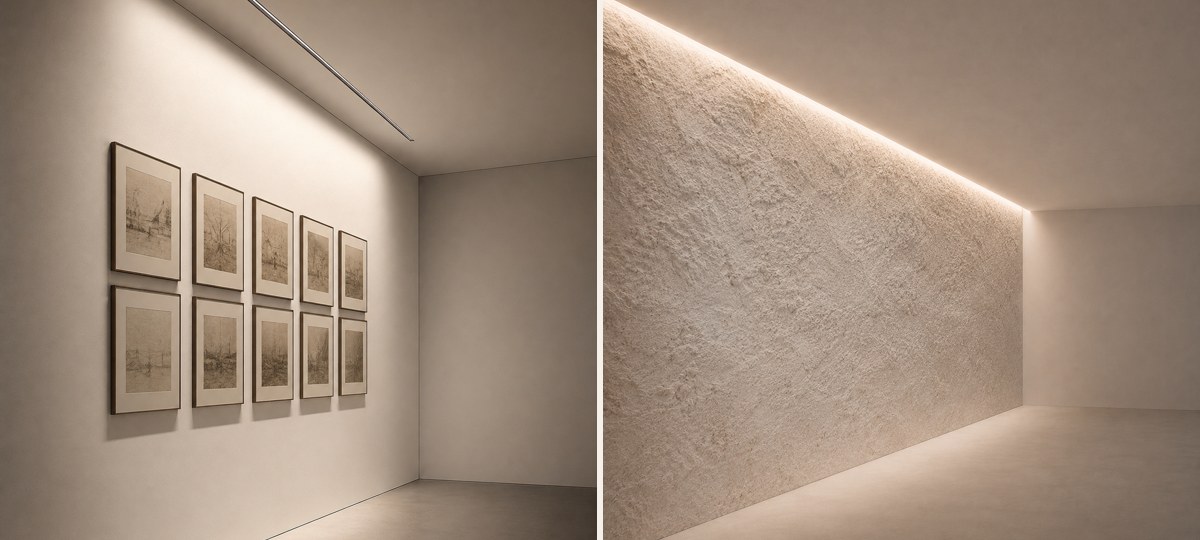
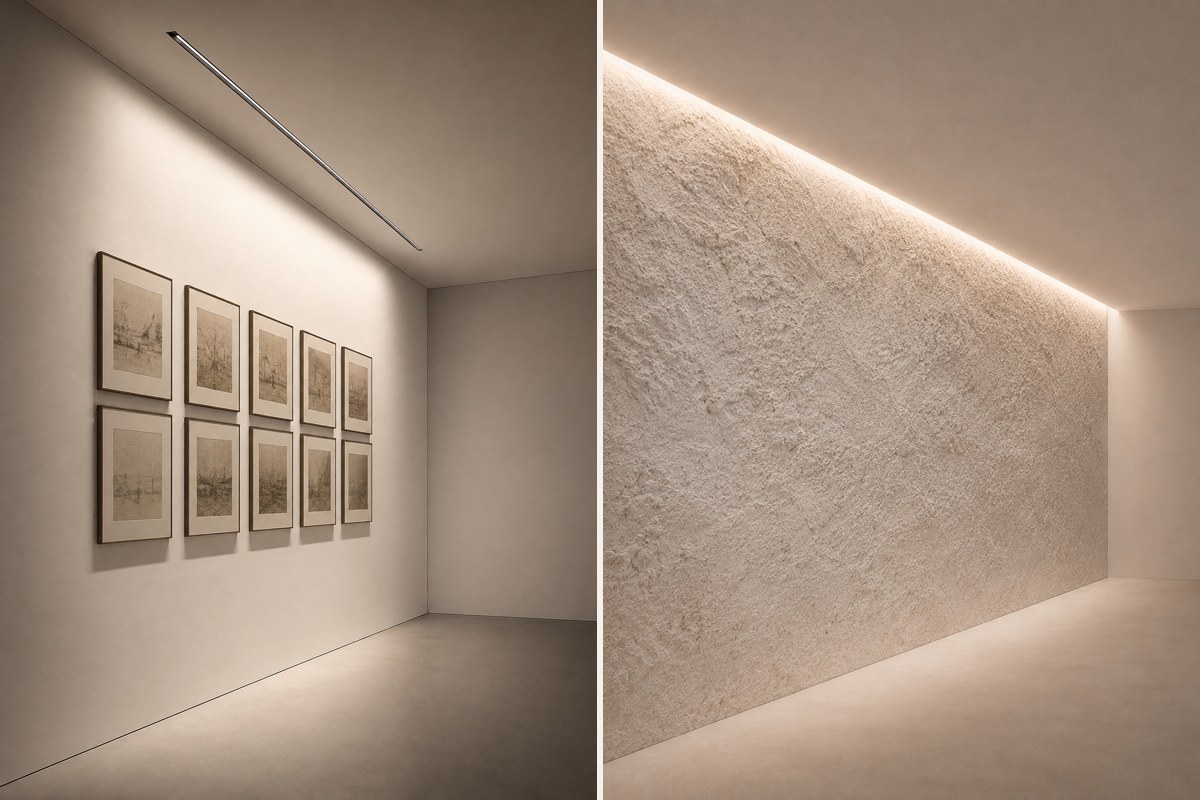
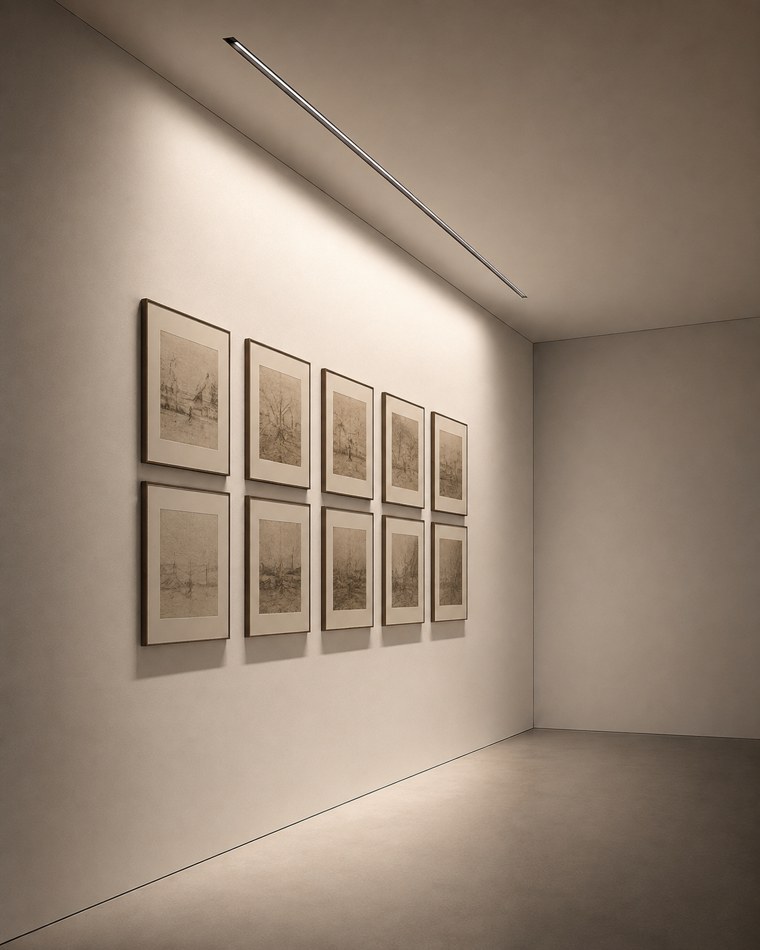
A wall washer is designed to spread light evenly across a vertical surface. The fixture sits farther out from the wall, and its optics distribute light across the height of the surface. When the fixtures are spaced well, the wall reads as one softly lit plane, with fewer bright patches and abrupt changes in brightness.
This works beautifully on a painted wall, a reception backdrop or a retail display you want people to take in as a whole. Think of a hallway lined with framed prints. An even wash lets your eye move from one frame to the next while giving the hallway a brighter, more open feel. The same approach can bring a sense of calm to a long, plain wall in a living room.

When the material is the feature
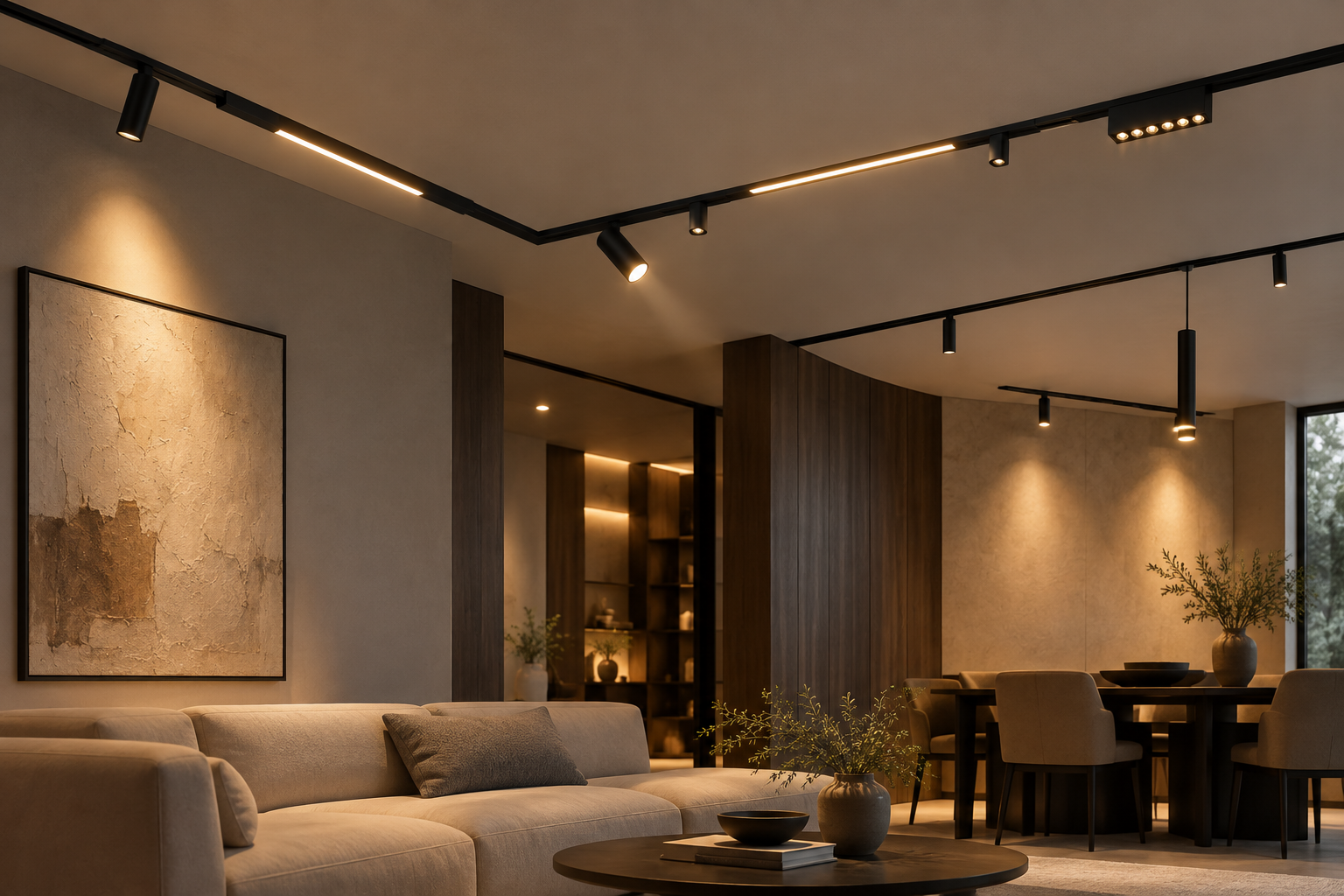
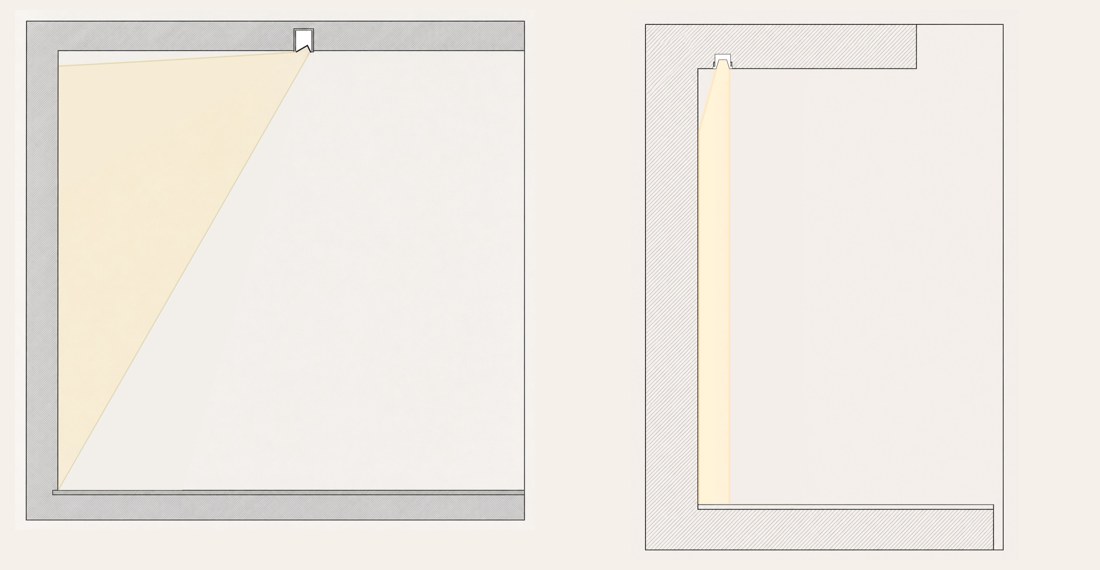
A wall grazer sits close to the wall and directs a narrow beam down the face of it. The light catches the raised parts of the surface, while the recesses stay darker. On exposed brick, you begin to see the edges of each brick and the depth of the mortar joints. On fluted timber, the ridges and grooves create a repeating rhythm of light and shadow.
Grazing works well with materials that have relief you want to bring out, such as rough-cut stone, exposed brick, textured concrete or fluted panels. It also makes the workmanship more visible. A seam between panels or a patch in the plaster that barely shows in daylight can become obvious under a grazer. If you’re considering this effect, test the light on a sample that includes a joint or seam as well as the material itself.
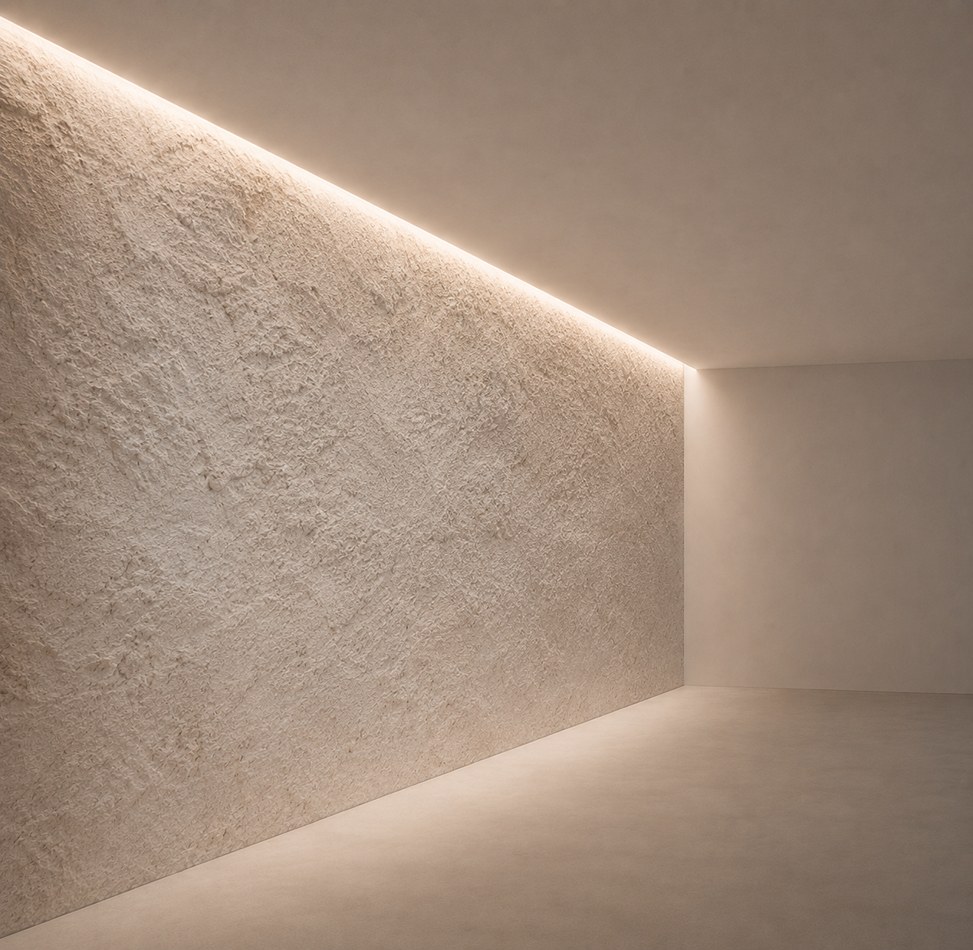

Placement changes what you see
| Comparison | Wall washer | Wall grazer |
|---|---|---|
| What you see | A soft, even spread of light across the wall | Highlights and shadows that reveal the surface relief |
| Where the fixture sits | Farther out from the wall | Close to the wall, with the beam skimming the surface |
| Where it works well | Painted walls, artwork groupings, reception backdrops and retail displays | Stone cladding, exposed brick, textured concrete and fluted timber |
Decide which effect you want while you’re still planning the ceiling. The right distance and spacing depend on the wall height, the fixture’s optics and the finish you’ve chosen. Seeing the proposed light on the actual material can help you judge whether the texture feels subtle or pronounced before the fixture positions are fixed.
Start with what you want someone to notice when they walk into the room. If it’s the artwork or the quiet glow of the wall as a whole, wash it. If it’s the ridges in the stone or the rhythm of the timber flutes, graze it.