Lighting specifications can look like a list of unrelated numbers. The useful part is knowing which question each number answers. A fixture can consume little electricity, produce plenty of light and still put that light in the wrong place.
1. Separate Power from Light
Watts describe electrical power consumption. Lumens describe total visible light output. Lux describes illuminance on a surface: one lux is one lumen per square metre. When comparing products, use fixture output rather than mixing a bare LED-chip figure with the output of a finished fitting.
2. The Terms You Will See Most Often
| Term | What It Means | What to Ask |
|---|---|---|
| Watts (W) | Electrical power consumed | Is this the complete fitting’s power consumption? |
| Lumens (lm) | Total visible light output | Is this measured output after optics and diffusers? |
| Lux (lx) | Light reaching a surface | How much will reach my counter, page or display? |
| Efficacy (lm/W) | Light output per watt | Are products being compared on the same basis? |
| Colour Temperature (K) | Warm or cool appearance of white light | How does it look with my room’s materials? |
| CRI | A colour-rendering measure | Does the light show important colours well? |
| Beam Angle | The spread of a directional beam | Will it cover the object at this distance? |
| Driver | Electronics that supply the LED correctly | Is it compatible with the fixture and control? |
| IP Rating | Protection against ingress of solids and water | Is the fitting suitable for this actual location? |
3. Understand Beam Angle and Distance
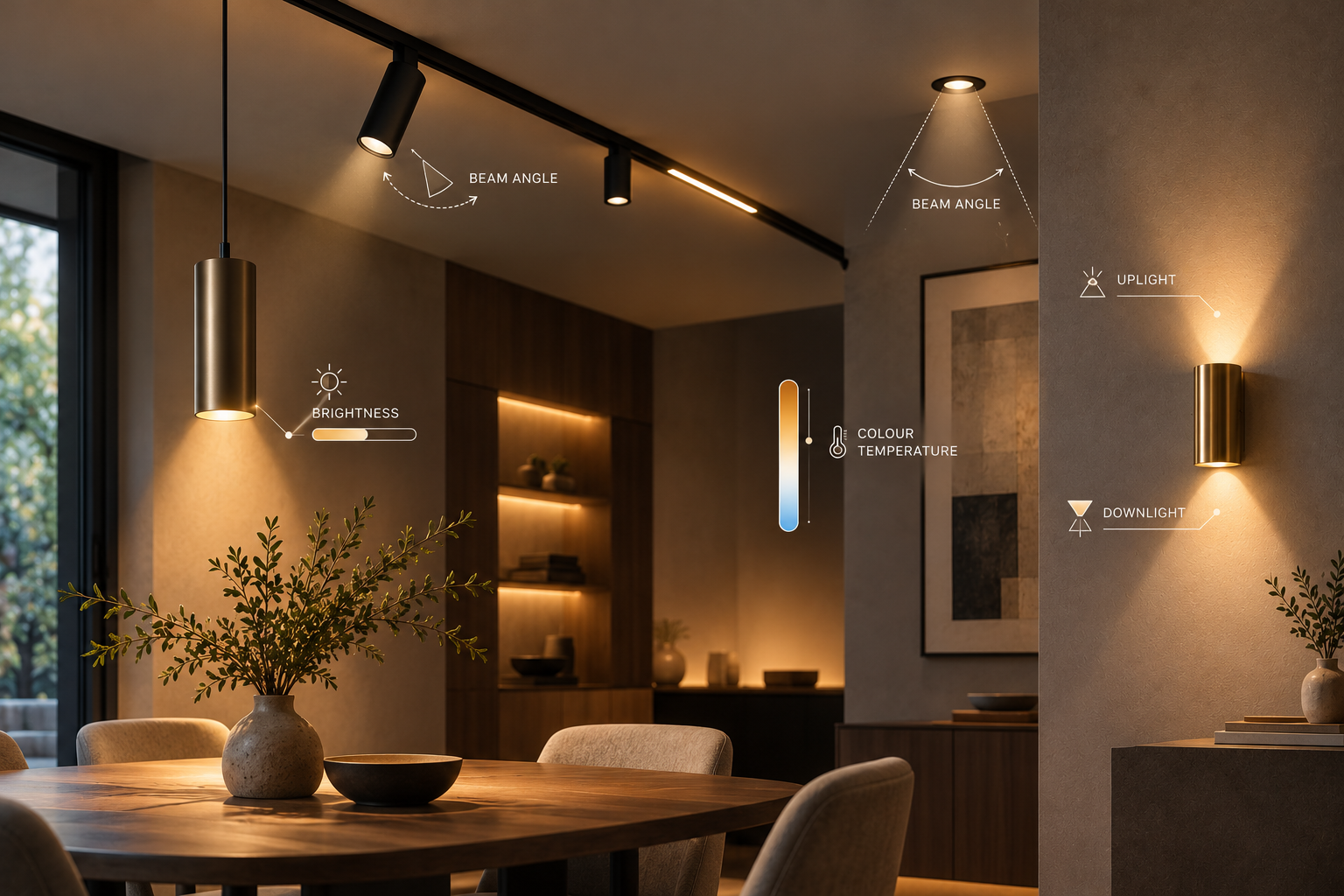
A narrow beam concentrates light into a smaller area; a wider beam spreads it more broadly. Mounting height and aiming change the result. The same lumen output can create very different illuminance on an artwork or table. Ask for photometric information or a demonstration at a realistic distance rather than choosing beam angle in isolation.
4. Know What Dimmable Actually Requires
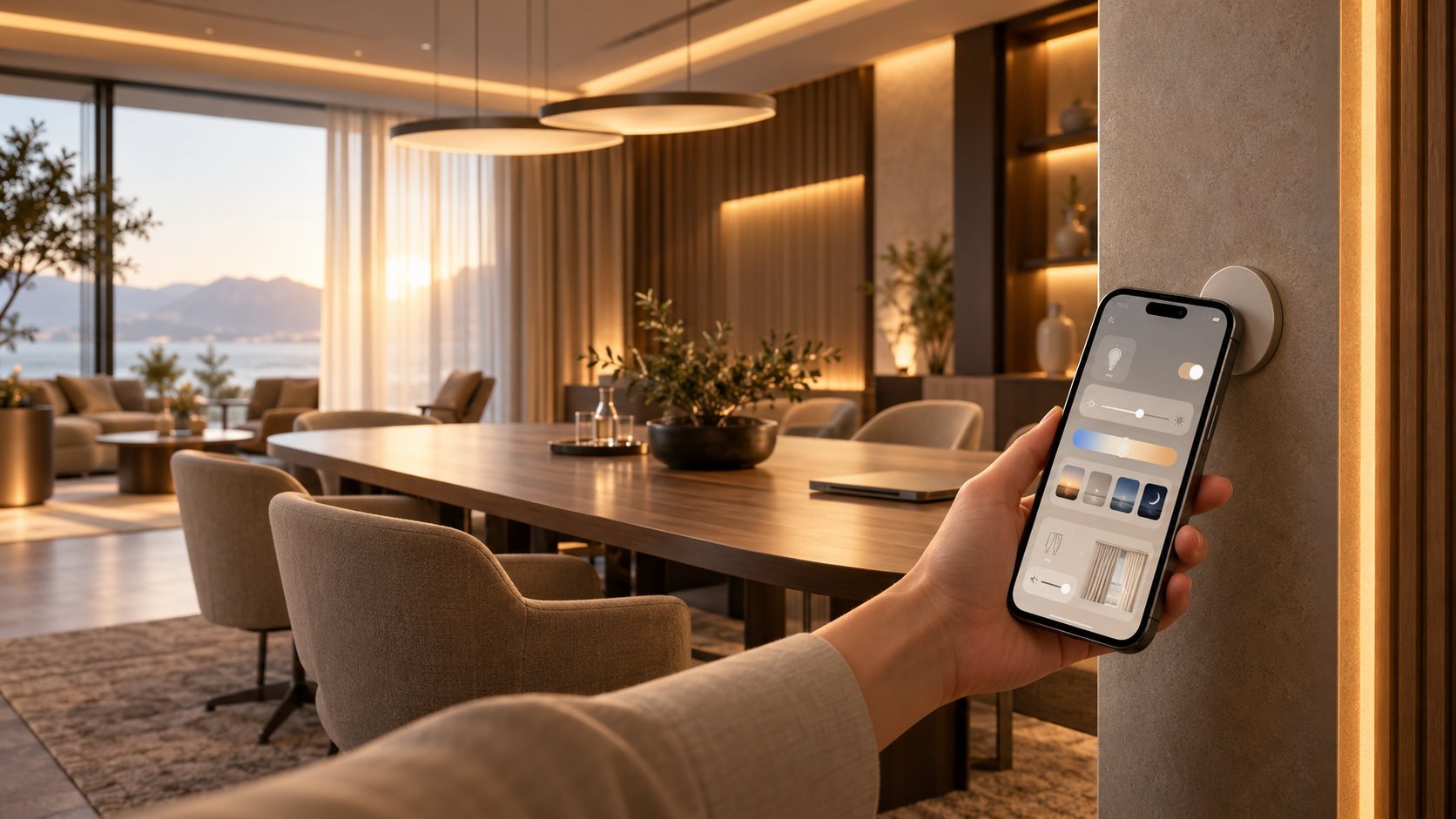
A dimmable fixture needs a compatible driver and control method. Phase dimming, DALI and wireless control are different approaches, not interchangeable labels. Confirm the complete combination, the usable dimming range and whether the light remains stable at low levels.
5. Treat Glare as a Design Question
Glare is uncomfortable brightness or contrast in the field of view. Shielding, recessed sources, optics and aiming can help, but position matters. Check the fixture from the sofa, bed or desk. A specification alone cannot replace checking the installed viewing conditions.
6. Read Lifetime Figures Carefully
Rated lifetime is not a promise that every fitting will perform identically for that period. Ask what the stated figure measures, under what conditions, and how it relates to the warranty. Driver quality, heat management and installation conditions also affect performance.
A Short Buying Checklist
- Compare output, power and beam distribution together.
- Choose colour temperature and colour rendering separately.
- Confirm the driver and dimming method.
- Check location suitability and maintenance access.
- Ask for a sample where appearance or comfort is critical.
The goal is not to memorise every specification. It is to ask the right question before choosing the light.